


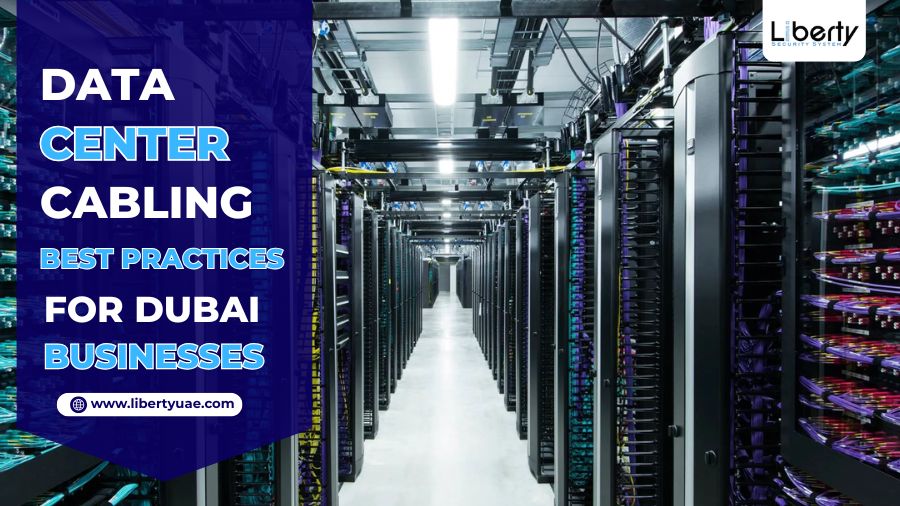

For companies in Dubai, data center cabling is a crucial infrastructure element that must account for superior ambient temperatures and quick technical scaling. Implementing a structured cabling system instead of point-to-point connections is the main recommendation to ensure flexibility and decrease downtime.
In Dubai, where technology changes every day, having a robust and organized network is more crucial than ever. Whether you are a small startup or a big corporate office, the way you handle your cables, known as Data center cabling, can make the distinction between a seamless function and a digital nightmare. Let’s find out the best practices for cabling in 2026.
Table of Contents
What is Structured Cabling?
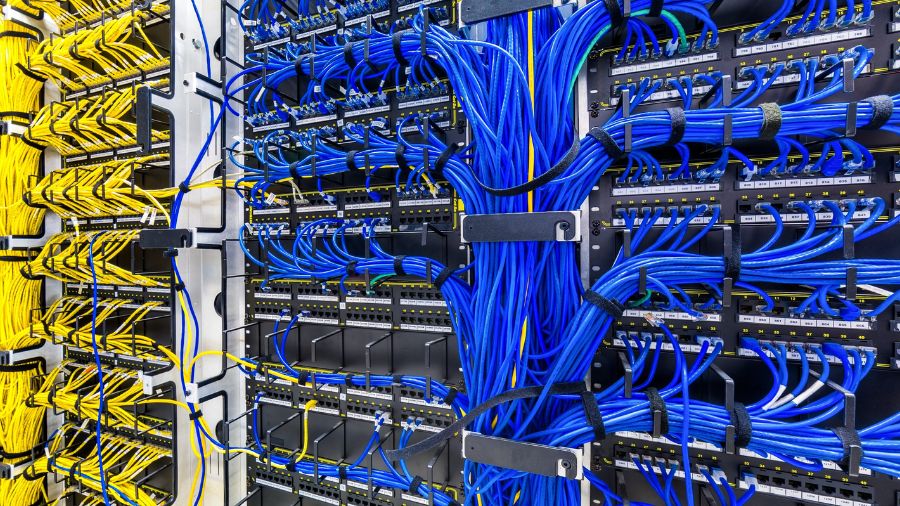
Imagine two rooms. In the first room, every computer is linked directly to a server with a long, loose wire. After adding ten more computers, the floor is covered in a mess of tangled cables. This is named point-to-point cabling, and it is very difficult to solve if something goes wrong.
In the second room, all wires are clearly tucked into the walls and ceilings. They meet at a central hub called a patch panel. Every cable is labeled and organized. This is structured cabling. It is a common way of establishing your network so that it is simple to handle, expand, and repair.
Best Practices for Data Center Cabling in Dubai
1. Plan for the Dubai Heat
Dubai is popular for its high temperatures. Inside a data center, servers produce so much heat on their own. If your cables are tangled and piled up, they block the cold air flow. This makes your cooling fans work harder, which increases your electricity bills and can even lead to your costly servers overheating and breaking.
Utilize overhead cable trays or ladders to keep wires off the floor and away from the back of the servers, where hot air comes out.
2. Choose the Right Cables (Cat6A to Fiber)
In 2026, companies in the United Arab Emirates are utilizing more data than ever due to AI and high-speed cloud services.
- For Copper – Most professionals recommend structured cabling Dubai assignments now utilize Cat6A cables. They are quicker and better at managing heat than older versions.
- For Fiber – For very long distances or linking various floors, fiber optic cables are the finest option because they hold data utilizing light and don’t suffer from electrical interference.
3. Organizational Standards – Color Coding and Labeling
Effectiveness in IT Support in Dubai is based on how rapidly a specialist can recognize an issue. A disorganized server room causes human error, where the wrong cable is pulled by mistake.
- Universal Color Coding – Set up a stringent policy for cable colors. Blue – Common Data/Internet. Red – Crucial Power Paths, Yellow – Security/CCTV, White/Grey – Voice and Internet Management.
- Double-Ended Labeling – Every single cable must have a printed, smudge-proof label at both ends. This permits a specialist at the server to understand precisely which port on the patch panel the cable belongs to without tracing it by hand.
- Digital Cable Mapping – Keep a technical map or spreadsheet of your cabling layout. This makes troubleshooting much quicker during an emergency.
4. Signal Integrity – Separating Power and Data
Electrical interference is a silent killer of network speed. This is usually caused by operating high-voltage power lines very close to sensitive data lines.
- Preventing Crosstalk – When power and data cables are bundled together, the electrical sector from the power cable can corrupt the data packets, cause slow internet, and dropped links.
- Physical Segregation – Best methods dictate keeping power and data in separate trays. If they should cross each other, they must do so at a 90-degree angle to decrease interference.
- Liberty UAE Standards – Always follow the distance policies given by professional installers like Liberty UAE to make sure your network signals remain crisp and quick.
5. Scalability and Modular Design
Your business would not stay the same size forever. A better cabling system must be modular, meaning it can expand as you expand.
- Use of Patch Panels – Rather than operating a long wire from a computer all the way to a server, operate it to a patch panel. This makes it simple to modify where a computer is linked without moving long cables.
- Slack Management – Do not leave miles of additional cable coiled up in the rack, but do not pull them so tight they snap. Leave a small service mark for future adjustments.
- Vertical and Horizontal Managers – Utilize devoted organizers on the sides of your racks to hide the cables and keep them from hanging in front of tools.
6. Security and Compliance
In the United Arab Emirates, data security and physical protection are regulated. Your cabling should fulfill local fire protection and building codes.
- Fire-Rated Jacketing – Make sure your cables utilize Plenum-rated or LSZH jackets. In the case of a fire, these cables don’t release toxic smoke, which is a need for a number of commercial buildings in Dubai.
- Restricted Access – Your cabling infrastructure must be behind locked cabinets or in protected rooms. This controls unauthorized people from physically tapping into your network or accidentally unplugging crucial hardware.
Why Your Business Needs Professionals in Dubai
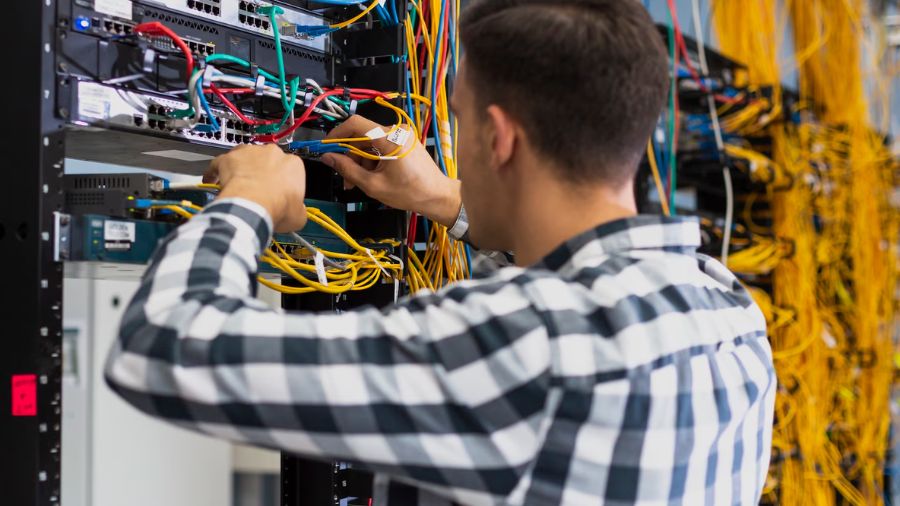
Establishing a data center isn’t a DIY project. Working with an expert IT services company in Dubai makes sure that your infrastructure follows global standards and local Dubai Municipality rules.
Corporations like Liberty UAE have expertise in assisting companies in designing these systems from the ground up.
Expert installation means –
1. Less Downtime – If a wire breaks, an organized system permits your groups to locate and solve it in minutes.
2. Scalability – If your company expands from 20 people to 100, you can only plug in new gadgets without rewiring the entire building.
3. Safety – Clear cabling decreases fire chances and stops people from tripping over loose wires.
Conclusion
Your infrastructure needs to be as dynamic as the city itself in the fast-paced business world of 2026. Any successful data center cabling project must start with a professional, structured cabling system. You can shield your company from downtime and expensive expenses by putting a high priority on heat management, utilizing premium Cat6A and fiber, and upholding strict organization.
Don’t let disorganized cables hinder your development. Your network will be quick, safe, and future-ready if you work with a reputable IT services company in Dubai like Liberty UAE. The best way to make sure your company remains connected and competitive for years to come is to invest in expert IT support in Dubai right now.
Also Read: Cybersecurity Compliance Requirements in UAE Explained
Frequently Asked Questions
1. What is the difference between structured cabling and traditional cabling?
Standard cabling (point-to-point) affects running direct wires between gadgets, which rapidly becomes a tangled “spaghetti” mess. Structured cabling utilizes a standardized system of patch panels and trunk cables, making the network managed, straightforward to handle, and easy to set up.
2. Which is better for data centers: fiber optic or copper cabling?
Both are required! Fiber optic is better for long distances and high speeds between servers (backbone). Copper (like Cat6A) is excellent for shorter links and is usually more affordable for linking individual computers or local gadgets.
3. What type of cabling is recommended for high-speed networks in Dubai?
For 2026 standards, Cat6A is suggested for copper networks because it supports 10Gbps speeds. For high-speed spines, OM4 or OM5 multimode fiber is the top option to endure the heavy data traffic utilized by Dubai corporations.
4. How do I design a scalable data center cabling system?
Utilize a modular design. This means utilizing patch panels and leaving additional space in your cable trays and racks. This permits you to add new tools in the future without having to rewire your whole office.
5. What are the latest data center cabling standards in the UAE?
Most projects follow global standards like TIA/EIA-568 or ISO/IEC 11801. These confirm that your cabling is top-quality, secure, and compatible with modern hardware utilized internationally and in the UAE.
6. Are there UAE regulations for data center cabling installations?
Yes. Installations should usually adhere to rules from the TRA (Telecommunications and Digital Government Regulatory Authority) and local building codes developed by the Dubai Municipality to confirm connectivity and protection.
7. What fire safety standards apply to data center cabling in Dubai?
Cables should be LSZH (Low Smoke Zero Halogen) or Plenum-rated. In case of a fire, these materials don’t release toxic smoke or spread flames fast, which is a tough security necessity for Dubai commercial buildings.
8. How does proper cabling improve data center performance?
Clear cabling decreases “crosstalk” (interference) and signal loss. This confirms your data travels at maximum pace, resulting in faster internet and fewer “dropped” links for your employees.
9. What is the best way to manage cable airflow and cooling efficiency?
Keep cables in overhead trays or side managers instead of piling them behind the servers. This keeps the air ducts clear, permitting cold air to flow through the machines and controlling costly equipment from overheating.
10. How can poor cabling affect network downtime?
Messy cables make it tough to locate the correct wire during an emergency. If a cable fails and is not labeled, your IT group might spend hours, or even days, trying to find the issue, leading to your business losing money during the wait.