


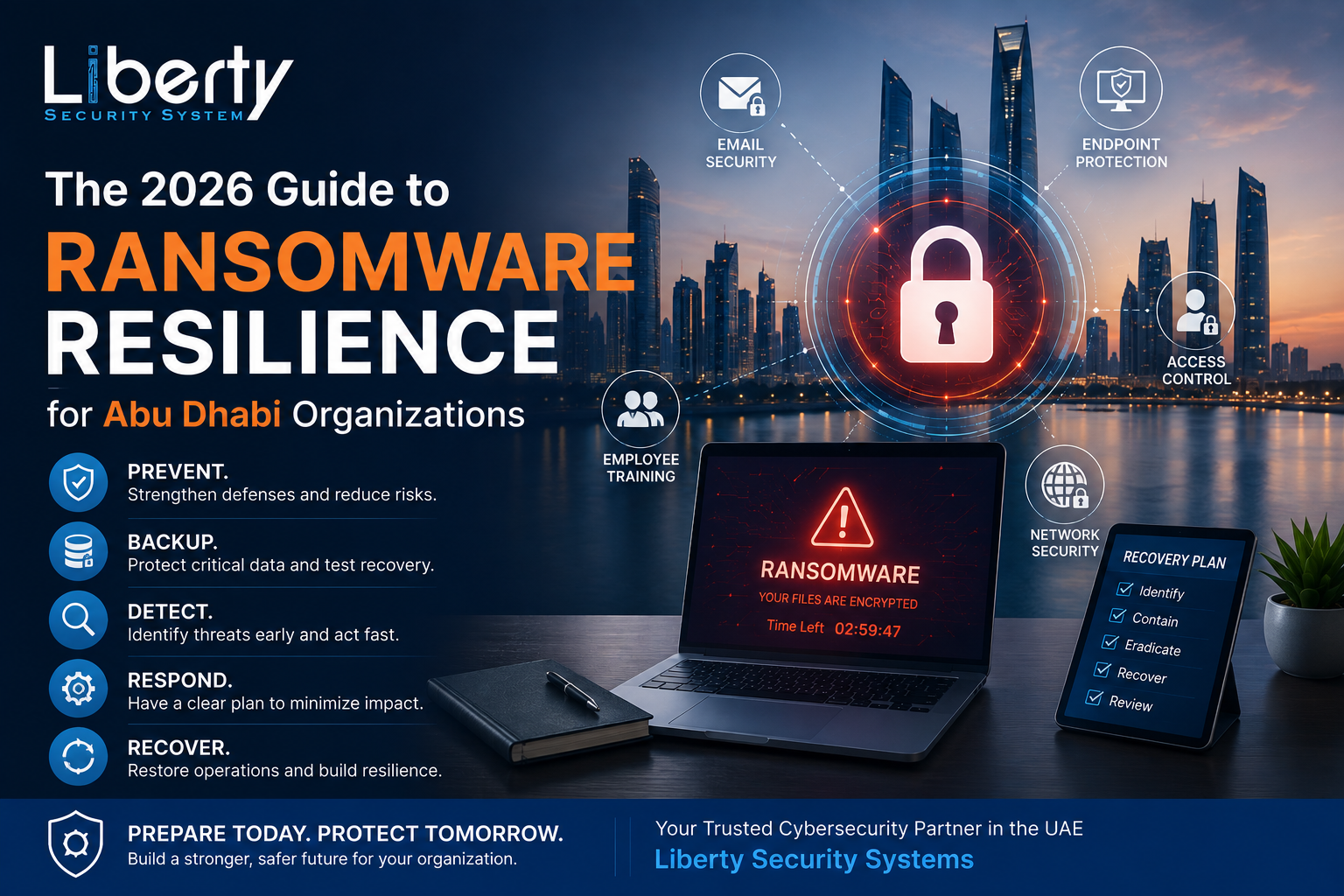

Imagine going to work in Abu Dhabi and finding that vital files are mysteriously missing. Customer records cannot be opened, business applications are unavailable and a message demands payment to regain access.
For an organization ransomware can quickly escalate into more than an IT problem. It can impact operations, customers, employees and business continuity.
So, ransomware resilience needs to be part of every organization’s cybersecurity planning in 2026.
Know What’s Most Important
Begin by identifying your most critical systems and data. You may have to secure customer data, financial information, business applications, and communication systems at multiple levels.
Keep Dependable Backups
Backups are one of the most important components of ransomware resilience. Organizations must have secure, up-to-date backups and test their ability to recover critical information.
Manage Access
It is not necessary for every employee to have access to every system. Stronger authentication and use of appropriate permissions can reduce the opportunities open to attackers.
Protect Endpoints and Email
Many ransomware incidents begin with a compromised device or malicious email. Endpoint protection, email security, software updates, and employee awareness can therefore play an important role in prevention.
Prepare for the Worst
Even strong security controls cannot guarantee that an organization will never face an attack. A clear incident response and recovery plan helps teams understand what to do if ransomware gets through.
Organizations across Abu Dhabi and the wider UAE can benefit from working with experienced professionals when developing this strategy. Liberty Security Systems can support businesses with practical cybersecurity solutions in Dubai and wider UAE security requirements.
Choosing the right cyber security company is not simply about installing security products. It is about building a coordinated approach that combines prevention, monitoring, response, and recovery.
For Abu Dhabi organizations, ransomware resilience in 2026 should be viewed as an investment in business continuity—not simply another IT task.